Tuesday, 29 March 2011

Home time..

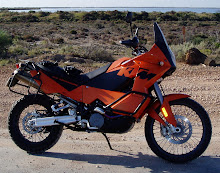
Two weeks in Cape Town and we have wined, dined, enjoyed the stunning Cape coast, shipped our beloved bike and camping gear to Australia and morphed out of biker mode. We arrived here tired and have enjoyed having this time reflect on our 163 days on the road.

It is difficult to explain what this journey has been like, but throughout those long rides in the heat and wind or hours taken to cross a border in the north whilst the cogs of bureaucracy turn at a snail pace – we have laughed. In this light I have tried to come up with the 10 things I learnt whilst riding through Africa, they are in no particular order:

Riding pillion is not exercise; you can gain weight in Africa!
I love riding across open plains and the desert in particular.
I have seen things here that I will never understand.
African women are incredibly beautiful and strong.
I was surprised at the adrenalin rush of seeing animals in the wild.
The African culture is colourful, the Arab the most hospitable in the world.
Financial and voluntary aid is definitely not always the answer.
Some people are content without progress and should be let be.
Africa is nothing like I expected, or had been led to believe by the media.
Tilmann is the best person in the world for me to travel with.

On a serious note, we gave ourselves the opportunity to live out a dream and ride through Africa. We have had endless conversations about what we have seen, what is right, what is wrong, who says everyone must progress, what is really important to people and what right or place do westerners and Europeans have to ‘guide’ Africa through change?

We have been welcomed so warmly by locals in the north of Africa and had the opportunity to meet some incredible people on our journey, Africans and other travellers alike. We came all this way without any problems, a super KTM bike, good health and nothing ever but the feeling of being safe and secure.

We would like to thank our parents, Fiona, Kevin and Helene for their support and enthusiasm despite their worries about our safety and to
all our family and friends who sent their best wishes throughout the trip.


People keep asking if this has been an adventure of a life time for us, it has, but surely you are allowed more than one - right??
 

Friday, 18 March 2011

The perfect last ride...

On entering South Africa we had the sense of the end coming near, a feeling that brought mixed emotions for both of us. We rode quite quickly through the north Springbok, Clanwilliam and then Stellenbosch. The landscape in the North is dry but beautiful with the Orange and Opliphant Rivers winding through the valleys and feeding the many wineries one encounters further south.

Stellenbosch was of course lovely but for us highlighted the differences between the haves and the have nots in South Africa. We spent a day being driven around on a winery tour, tasting what was on offer and enjoying a bit of luxury after months of no wine and not so much civilization! After travelling through Africa it is a surreal experience to sit in Franschoek or Stellenbosch in a lovely café or restaurant, just like being in Europe in the summer. Whilst in Stellenbosch we visited Lanzerac Winery which is where Tille’s cousin got married, a lovely spot and great for us to see it first-hand.

Wanting to savour the last ride into Cape Town we rode from Stellenbosch to the Cape and after an afternoon of visiting penguins at Boulder Beach camped at a place called Miller’s Point which was the perfect location for the last tent night. Must admit the good restaurant next door raised the standards somewhat and we weren’t exactly roughing it!

The day of our final ride had come; we cruised along the coast of the cape, savouring the feeling of freedom on the bike. First stop was the Cape of Good Hope to take a picture of us with the bike at the most south-western point of Africa; this caused much amusement (and frustration) to the bus-loads of tourists all wanting their photo too.

Feeling elated that we had made it we rode up to the lighthouse on the Cape and then along the western side through Chapman’s Peak which with it’s incredible views and sheer drops down into the sea before you arrive in Hout Bay was indeed – the perfect last ride.

From Heidelberg to Cape Town took us 148 days in which we covered 20,647km. We sit in Cape Town where we have some time to enjoy what is an offer here and attempt to let it all sink in and reflect on what we have achieved – it is hard to imagine now that all of the experiences in our heads and hearts are real, but when asked would we do it again? Yes, is the resounding answer.

Saturday, 12 March 2011

Namibia for nature lovers...

We had been expecting rain in Malawi, Zambia and Botswana but felt confident that the deserts of Namibia would be dry. Turns out we were lucky in the other countries to have as little rain as we did and that Namibia has experienced incredibly high rainfall this year! In fact the blackboard outside the shop in Solitaire informed us that they had experienced more rainfall in January and February this year than the last two years together.

The high rains meant that we were not able to go into Etosha National Park as tours were not running and that the gravel roads, which make up about 90% of the roads in Namibia, were sometimes not passable and often laced with rather large puddles, running creeks and not so glorious mud!

Not to be deterred by mud, creeks, rivers and rain we headed into the Damaraland and were treated with incredible scenery, 260 million year old petrified trees, 6000 year old rock paintings of the indigenous people and a great campsite surrounded by riverbeds and red mountains.

We had said goodbye to the sea in Dar es Salaam and were very pleased to reach the west coast of Africa in Hennties Bay, a town built between the sea and the desert, a strange place to say the least. We rode south from there along a salt road to Swakopmund, a town this time wedged between the coast, sand dunes and flat desert. After some 19,000km of sitting pillion it was my turn to take the reins of quad bikes that we hired to ride through the dunes – I was petrified for most of the time, opting not to ride my quad bike up the side of ridiculously sloped dunes, Tille needless to say excelled at it and had a ball!

Lovely as it was to see the sea we headed back inland through the Naukluft Mountains towards Sossusvlei. Two very long days of corrugations, gravel and puddles later we reached Sesriem, the last camp before the Sossusvlei Park. After months of being woken up early in the tent and going to bed at the grand hour of 8pm we were easily up at 5am to drive the last 60km into the park to enjoy the sun climbing over dunes that rise up to 350m – the colours, the scenery, the quiet – it was just magic. The Dead Vlei with a white stone base, dark dead trees and surrounds of red dunes equals the Sossusvlei in beauty. We climbed up huge dunes, enjoyed the view and must admit it is a highlight of the trip. (Note to other bikers, you can NOT take your motorbike into the Sossusvlei Park and must use the shuttle service the whole way, not just for the last 5km which is 4WD only.)

Our ultimate day of gravel for the whole trip (our asses and my hips yell yeeehaaaa) took us through a river that was a bit deeper than anticipated, over a mountain pass and ended with 20km of slippery mud which tested my nerves, Tille’s riding and the bike’s endurance… Needless to say on arrival in Maltahöhe with a beer in hand all were well! Our ultimate day of gravel was followed by a long drive south on some lovely smooth bitumen to a wild camp ground surrounded by kokerboom trees, huge piles of rocks that looked as though they had been built by humans and a rather odd collection of people made from straw and metal and old cars and motorbikes to keep us company.

The time has come however for the last border crossing of the trip, the last country and the last 1000km. We have had such a wonderful experience but as we ride towards the finish line we must admit that our heads our full, our bums are a little sore, bodies are tired and we are very much looking forward to seeing family and friends.

Wednesday, 2 March 2011

The peace and magic of Botswana...

There is something a bit magic and definitely something very peaceful about Botswana. With a population of two million in a land area the size of France, after the hustle, bustle and occasional hassle of other countries in Africa, Botswana is incredibly peaceful.

We arrived in Kasane and boarded a small boat for a cruise along the Chobe River which runs between the Chobe National Park and Namibia – sighting elephants, baboons, crocodiles and kudu on the banks of the river and drifting between reeds teeming with hippos. Further along the river we sighted a pair of lions on the bank and another one amongst the reeds – it is incredible to be so close to nature.

The Batswana, as the people here are known have been lucky in comparison to other countries we have been in to find masses of diamonds in their land – the government has clearly directed this wealth into infrastructure, education and health. In fact they are the only African country to provide free HIV medication to those in need, which at a rate of 25% is a large portion of the population. In 2006 their life expectancy had dipped to 33 years of age, meaning that Tille was already ‘old’ but now in 2011, the rate is back up to a respectable 77 years of age.

Our next stop was a place called Elephant Sands where the motto states ‘that Elephants rule’ and do they what! We camped at this lovely little lodge, sat around a campfire drinking a beer and watching a herd of about 20 elephants bath and drink from a water hole not 20 metres away. Once they had drifted away a leopard (now we have the big 5!!) came to the water hole to see what was for supper. We had been promised that elephants will not walk over tents, but at 1am when there was one literally less than a metre away (foot prints to prove it!) we were feeling a little unsure! To be so close to nature is magic indeed.

After a short stop at Planet Baobab which was a little bit like a Disney inspired African lodge we rode across the top of the Kalahari to Maun where we camped on the edge of the Okavango Delta. Our final day took us along the western side of the Delta where we spotted zebra, marabou and ostriches on the road.

Between the vast open plains and wilderness left untouched by the small population, friendly smiles from the locals and the western comforts of home (Tille keeps saying he feels like he is in Australia), Botswana has been simply magical and peaceful and a place we would love to return in the dry season to make the most of the Kalahari and the Okavango Delta...

Saturday, 19 February 2011

The mighty Zambezi and those falls called Victoria…

We drove from Chipata, the first town in Zambia after Malawi through to Lusaka where we camped amongst a heard of zebra and family of baboons and serviced our beloved bike before riding south to Livingston, named of course after David himself and home to the Victoria Falls.

After months of travelling in ‘non-tourist oriented’ countries we have made it to tourist central, which has its perks as well as negatives! Whilst here in Livingstone we spent a morning (well, 15 minutes) soaring above the Victoria Falls and gorge surrounding them in a helicopter, before spending the afternoon walking through all the trails of the park that surrounds the falls, viewing them from above, under and every other angle possible. We as usual opted to not spentdthe extra to a hire a raincoat and got absolutely drenched, but had a wonderful time and the falls, well they are simply amazing…

The helicopter didn’t quite quench our thirst for adrenalin so we booked in for white water rafting on the mighty Zambezi River. As it is wet season, the river level is quite high and thus (thankfully to me!) we could only do rapids 14-25 which are apparently ‘milder’!!! We were both thrown out on a number of occasions, Tille finding himself a good 8 metres from the raft and me stuck underneath it! The whole day however was great fun and something we’d be pretty keen to do again!

To top off our tourist town weekend we booked into a sunset cruise that included all you could eat and drink – classy… We cruised along the Zambezi in a lovely small boat with about 20 other people and were told that if we were really lucky we would see elephants, hippos and crocodiles on the banks of the river – and what did we see?? All three! We clinked our gin and tonics and agreed that life is not bad…..

Thursday, 17 February 2011

The olden days of Malawi

Within half an hour of crossing into Malawi, Tille commented that he felt as though he had just stepped 100 years back in time. We ride through scenes where women only wear dresses, older men wear hats, most are on foot or bicycle with very few cars to be seen (in fact the only taxis are a bench on the back of a bicycle), women are riding side saddle on the back of the man’s bicycle, with nearly always, a not-so-small-child strapped to her back.

The mountains reach up to the west and the hills roll down to Lake Malawi on the east. Most land is used for agriculture, all of which is done by hand; there is not even an ox or donkey in sight. Judging from by what is for sale in the lean-to wooden structures that serve as shops in the small villages, the lush land grows corn, tomatoes, capsicum, onion, potatoes, mangos, bananas and the biggest money maker for the country, tobacco – the lake provides all manner of fish which for the game, can be purchased on the side of the road.

We ride through village after village where life is basic to say the least, the vast majority of houses clearly have no running water, are made from mud, have chickens and children running around the yard and we are pretty sure that there is no electricity to speak of – for those that have it, power cuts are a daily, if not hourly occurrence. We start to wonder what these people are like. We stop next to one of these wooden lean-to shops to buy a coke and see if we can chat to the locals a bit – they are sitting in the shade away from the heat of the afternoon sun with reggae on – they asked us if we like to dance, here in Malawi – we like to dance they tell us, with that they laughed and went back to their conversation.

Malawi suffers from having neighbours with massive tourist attractions and whilst it has the lake, some mountains and really beautiful countryside it just cannot compete. The others rely on tourist dollars to keep their economies afloat – growing and exporting tobacco clearly doesn’t cut it. The life expectancy is a shocking 44 years old with HIV/AIDS being one of the main causes of death. We heard a government official on the TV give a presentation within which he praised the ‘one cancer specialist’ in Malawi, saying that if there were more, further lives could be saved.

It is hard to imagine that such a backward world still exists, but lying here in the middle of southern Africa is Malawi, trundling along at its own pace and outside of the issues they share with all developing countries – they are in quite a nice little bubble that the locals definitely seem to like…

Monday, 7 February 2011

101 days to Zanzibar… (literally!)

As we rode over the last few hills through the Masai region of Kenya we caught a glimpse of Mount Kilimanjaro through the clouds, our first taste of Tanzania. Within an hour of crossing the border the scenery had changed yet again with green mountains looming in the distance and a family of giraffe on the side of the road, looking at us as if we (well the bike anyway) was the same colouring as them but definitely not long lost cousins! We finished the day riding through the mountains to Arusha with a dusk-ish light, rainbows, rolling farming land, Masai men and women in their tartans that made me think of the Scottish highlands and a feeling that we were really going to like Tanzania.

We left Arusha and spent a night in Moshi, the village at the foot of Mount Kilimanjaro where we camped at a centre that supports local educational projects. On deciding that we didn’t need to climb the mountain (at USD1500 per person!) we headed towards the Usambara Mountains and the village of Lushoto. After riding through the red and green wilds of Kenya and north Tanzania it was a treat to ride up into the mountains and be surrounded by lush, green plants, creeks and waterfalls. Just past Lushoto we found our campsite which consisted of a palm and wood structure that sat literally on the edge of the cliff with a view back down to the plains, it was aptly named the ‘Heaven Bar’. The campsite was a choice of three terraces, also on the cliff face and boasted a ‘toilet with a view’ but other than that no facilities – but it was a view we could not resist.

Although we are not fans of the big cities, there would be no Zanzibar without going to Dar es Salaam where we could leave the bike for a few days. Zanzibar is of course white sands, turquoise seas, palm trees, laid back people, reggae, beer and cocktails. We stayed in Bujwe on the east side of the island in an eccentric little place set up by a guy called Mustapha. If it had not been for Tille banging his head on a low hanging air conditioner in the street and requiring stiches (with no anaesthetic mind you!) in the Stone Town hospital it would have been 100% perfect!

On our return to the mainland Tille’s stitches were removed and we started the long road west towards Malawi, passing through the Mikumi National Park where we met with a herd of elephants on the side of the road (no more than 20 metres away!), zebra, giraffe, warthog, baboons, birds and water buffalo. The animals and landscape as a pair make Tanzania simply beautiful. We stayed in Morogoro, just outside Iringa and then at the locally owned and run Bongo Camp in Tukuyu before riding the last stretch through rolling tea fields into Malawi.

I write this from the Mushroom Farm which is a campsite on the edge of a cliff just near Livingstonia, overlooking Lake Malawi – which so far seems like a country stuck in a time warp with an innocence that is very appealing.

Thursday, 20 January 2011

Camping in Kenya...

My second bus trip to Isiolo took me through tribal land where people still dress in their traditional clothes and the landscape is dry and harsh. Sitting between a Preacher and armed guard I was in safe hands throughout the journey and learned more of Kenyan politics and life. Tille arrived later that day with the Dutch couple and two Swedish lads that he had been riding with – seeing a giraffe in the wild being the highlight of their day. I was just glad to see them all in one piece and to mark the end of my bus journeys in Africa!

After a rest at the Gaddisa Lodge and close encounter with a hyena (see the film below) we headed south-east over the equator towards Lake Nakuru. Here we spent a wonderful day in the national park with giraffes, rhinos, zebras, gazelle, impala, flamingo, buffalo, pelicans, hogs, baboons, wild dogs and more. The park is set around a huge lake which we circumnavigated whilst spotting animals. From here we headed south to Lake Navaisha where we camped on the edge of another lake, surrounded by monkeys and watched a hippo grazing in the evening whilst enjoying our camp fire.

We are now in Nairobi at the famous overlander haunt Jungle Junction where the bike is receiving some love, I have been washing the desert out of everything that we are carrying (yes, Africa is challenging for those of us that suffer from slight domestic obsessive tendencies!) and we have been preparing for the southern hemisphere part of the trip.

In comparison to Ethiopia Kenya is an easy place to travel and well set up for tourist – sadly the price tag increases with this luxury! One reads of the crime and danger in Kenya and Nairobi in particular, but we have really enjoyed ourselves here and only had really positive experiences. So thank you Kenya and bring on Tanzania and a cocktail on the beach in Zanzibar!

Wednesday, 19 January 2011

The hyena ate my boot!

A BBC camera man happened to be staying where we were and took this night footage of a hyena circling our tent and playing with Tille's bike boot. In the morning we found the boot about 30 metres from the tent with some chew marks in the top!

Moyale - Isiolo Road (North Kenya)

Wednesday, 12 January 2011

Shaken and not stirred…

The so-called Trans African Highway provides a route from the far north to the far south of Africa. Thanks to the Chinese who are busy sealing every main road in Africa the vast majority of this is no longer dirt roads, except for the first 400km through Northern Kenya.

We spent the night on the Kenyan side of Moyale which was a dusty town with hardly any water but very good BBQ chicken! Because the road is rough we had decided that I would catch the bus and Tille would ride with a Dutsch couple that we met in Addis Ababa who are also on motorbikes. We had heard rumours non-stop since the beginning of the trip about how rough this road really is, sand, corrugations, rocks, volcanic rocks and deep ruts from the trucks driving through after the rain.

Day one was yesterday and started at 6.30am as instructed at the ‘tree’ where the bus leaves for Marsabit – my first destination. The bus arrived at about 7.30am and we could not board until it had been cleaned, this consisted of a man with a big bucket and a small cup throwing water on the bus in attempt to get the red dirt off. Once this was complete they changed some tyres, filled it with fuel and at 9am when I thought we were finally off we boarded and moved 50m to the station where the tyres would be filled with air – this took another hour.

10am we were finally on our way, by this point Tille and the Dutch had been riding for 2 hours towards their destination of Torbi (half way to Marsabit). The bus was an experience I will never forget – catapulting along a corrugated road in a bus full of locals with a window that did not shut, literally fearing for my life and turning orange from the dust! We arrived in Torbi (having passed Tille and the others about 60km back) which marked time for lunch and the repair of the two tyres we had blown whilst driving over corrugations and rocks at break neck speed! Four hours later the tyres were repaired (if I tried to explain how this was done you would not believe me!) and I was pleased to see Tille and the others arrive, exhausted but with no bike or body injuries! As the sun set my bus set off to complete the last 120km to Marsabit where I would spend the night and wait for the others – the only highlight of this trip was watching the Muslim passengers pray outside at sunset with the desert stretched out behind them. The rest of the trip need not be described in detail – simply put it was hell and I shall forget the experience before!

On arriving in Marsabit I thankfully crawled into my hotel bed and am today having a rest, enjoying internet access that actually works and…. Cadbury whole nut chocolate (!!) and waiting for the others to battle the rocks and corrugations that they face for day two before we complete day three, which will take us back to that brilliant invention called bitumen and into Isiolo!

Just before I posted this Tille called to say that they are going to run out of petrol so I had to find where to buy the canister, get it filled with fuel and then flag down every truck and vehicle going north on the main road until one was going far enough to take the fuel –in the meantime I made a huge number of friends with the locals, all who were willing to help me ‘sister I look after you’ and then suddenly wanted cash, to hold my hand or for me to buy them lunch, playing the ‘but sister, are you not a good Christian?’ card! However, mission accomplished and now I go back to waiting!

Southern Ethiopia…

We could not access blogspot for some reason in Ethiopia so these entries are a bit out of date, sorry to give you much to read at once! Für die Deutschen – die Ubersetzung kommt noch!
We left Addis Ababa and headed south towards Lake Langano, which is nestled in amongst some mountains. The book said it was tea coloured and promised to be the only worm-free lake in Africa that one could safely swim in, sadly the greenish slime on top put us off! We camped for the night next to the lake, admired the stars and enjoyed being away from the smog of the city. We had an interesting chat to the American owner of a nearby restaurant on the state of affairs in Ethiopia, the immense amount of aid and sadly, the corruption. It was comforting in some ways to confirm some of what we thought we had seen.

From Lake Langano we continued south to Awassa which is a college town also on a lake where we celebrated Ethiopian Christmas (celebrated on the 7th of January). It was nice to see families out together on Christmas day and we had possibly the best dinner in months at a restaurant that served stone-oven pizza and wait for it – brownies with strawberries for dessert! For me it is often just about the food!

We said goodbye to Awassa and drove to Yabello – the scenery changed dramatically from hilly roads surrounded by banana and coffee plantations to wide open spaces, flat-topped acacia trees and ever redder dirt. The road wove through numerous villages which had pretty much all joined together and the territorialism of the locals was notable, understandable we guess given the amount of fighting in the past between the tribes here. The village road was often blocked by a piece of rope with some plastic bags tied to it or sometimes a long stick to make a barrier. These barriers appeared unguarded and mostly we could ride over or duck and ride under to continue on our way. We struggled on this road to find a stop to have a break and when finally really needing one were surrounded by about 40 people within minutes of getting off the bike – it all starts friendly until they ask for money, clothes, food or anything that you will give them and then we must jump back on and ride off.

From Yabello it was a long descent to the border town of Moyale where the Ethiopian side suddenly looked developed in comparison to its Kenyan sister town on the other side of the ‘no man land’ strip. Ethiopia has been a challenge – time to see what Kenya has in store.

Impressions of Ethiopia…

It has taken me a week to organise my impressions of Ethiopia. I, like many I am sure, had the famine picture of an Ethiopian child from the 1980s firmly fixed in my head – the reality of course no longer matches this picture.

We crossed the border at Metema and climbed up a few thousand metres into mountains and green countryside to Gonder, a welcome change after three desert countries in a row. The scenery for us was beautiful but the small villages of thatched huts, donkeys, small children yelling ‘you, you, you…’ fanatically at us and people staring as we drove through brought feelings of awe and intrusion on our part.

Nearly everyone in Ethiopia works in agriculture and if all of the children were to go to school the industry would collapse and the people would starve – bit of a conundrum. The roads are covered in people walking from village to village, farm to farm and sometimes judging by the uniforms, to school; this makes driving incredibly slow. The children are responsible for the family cattle, donkeys or goats as soon as they can walk, tiny four year old shepherds using a stick to control their stock. The women are simply unbelievable and from what I can see incredibly hard done by! They walk with no shoes carrying huge loads of fire wood, water, crop from their farms and of course, their smallest child. The ‘carrying’ is just one task alongside the cooking, washing, cleaning, child bearing and manual labour on the farm. They are often in a group of women, but sometimes a man, their husband I suppose, keeps them company but he does not carry anything – nothing like the sight of the man riding a bicycle whilst his wife carries what is probably 30kg of water on her back on a mountainous road.

Aside from the hardship, their laughter, community spirit and general good humour is striking; the colours of their traditional clothes, hairstyles and tattoos that represent their tribe all adding to the feeling that we have gone back in time. This is a country where you can stay at a hotel on a beautiful lake, drink a cold beer and enjoy the local cuisine, where you can ride through a village and feel that perhaps these people should be left un-touched and alone with their mythical beliefs and not be influenced by the west, a country where many children are born into a life of very little to no chance – but a country full of people that smile, laugh and understand the importance of living each day.

I have found Ethiopia and its societal structure confronting, ignoring small children tugging on your clothes and having to sometimes step around someone lying on the footpath begging are not easy tasks, but remind me that it is my impressions of this world and not theirs that create this feeling. Either way, this nagging feeling that what we are doing is a bit voyeuristic is hard to shake.

We are currently enjoying a few days rest at Wim’s Holland House in Addis Ababa which is home to many other overlanders on bikes and 4WDs, people to bring in the New Year with over a glass of champagne and swap plans and experiences to date. When rested we will head south through the lake region and to the border of Kenya where the next chapter of the adventure will no doubt commence….

Wednesday, 22 December 2010

The infamous ferry and the incredible Sudan…

The ferry (and only entry point) from Aswan in Egypt to Wadi Halfa in Sudan across Lake Nasser has a reputation that stands before it. This is the second draft of this blog as the first one for those not interested in bureaucratic processes was really not all that interesting! It is basically a border crossing that takes five days in real time and a five year supply of patience! The process to leave Egypt includes obtaining various pieces of paper that prove you had not committed any driving offences whilst in Egypt – without a computer system it can only be through mental telepathy that this process has any truth to it, we are sure it is fool proof.

The ferry itself is rather old and not exactly what you would call seaworthy, the amount of luggage or produce that the locals each carry means that space is extremely limited and the ‘airline seats’ that we had paid clearly never existed! On getting the bike on a sad looking barge, we boarded the boat and once dark find a nice spot on the roof of the captains’ cabin and with our mats and sleeping bags had a pretty good night sleep under some amazing stars. Before departing the ferry (which is in itself a 4 hour process) we had to have our temperature taken by some grotty thermometer before being told we had ‘a healthy ear’ get passports stamped and get a piece of paper that permits you to travel. After clearing customs (which included getting a sticker on your bag and then a tick on the sticker without anyone actually looking in the bag) we got into a taxi of sorts and headed into Wadi Halfa where the fight for the least flea ridden bed began – grateful for bringing out tent we slept outside.

The next morning we must ‘register’ as tourists in Sudan, I am aware that this is getting a bit long so will try to shorten this: Give copies of important documents to the first man, get them stapled and receive the instructions – computer, captain, cashier, me… We find the only man with a computer and get another stamp, then to the captain for thumb prints and some more stamping, then to the cashier, then back to the first man who puts everything in a nice blue folder and a sticker in your passport, then back to the captain who stamps a bit more and then back to the first man who takes the blue folder back and returns the passport. Sounds simple but this is about a 3 hour process!

Thanks to a fellow traveller who had a tracking device in this car on the barge (which comes slower than the ferry as it cannot travel at night, no lights apparently) we receive notice that it is about to arrive. Tille headed back down to the port for another few hours of stamping, chassis number checking and general confusion before arriving happily back into town with an undamaged bike. One last meeting to get the carnet back and we were done, it is now Wednesday evening!!!

Now once in Sudan – the great stuff really begins. We drove through the Nubian Mountains and Desert from Wadi Halfa to Dongola, then on to Karima, Atbara and south to Khartoum. This route took us through some of the most amazing desert we have seen and after about 6 weeks of riding through countries that are mainly desert this is really saying something! The roads thanks to the Chinese are the newest and best bitumen we have had since Europe, creating an easy way through the desert and crossing with the green banks of the Nile that are dotted with mud hut villages and local people. The Nubian people are so warm and friendly and can appear from nowhere with the offer of tea. We camped next to 7000 year old pyramids in Karima and again outside of Atbara. They are just sitting there, nestled in lovely red dunes and with a full moon were an incredible sight to see.

We will now head towards the border and cross into Ethiopia some time near Christmas. After hearing so many negative stories about the political and safety situation in Sudan we have had nothing but purely positive experiences.

We would like to wish everyone a very, merry Christmas!!!

Tuesday, 21 December 2010

Riding in Sudan.... (Courtesy of Natalie & Paul Productions)


Riding in North Sudan with Natalie & Paul and a fellow Finnish rider.

Friday, 10 December 2010

Deserts, kings and temples...

Within half an hour of leaving Cairo (note, without getting lost!) we were back in the silence and vastness of the desert that we are known to love so much. The first oasis on the western desert loop was Bahariya which takes you back in time to a world of mud huts, donkeys and women shyly looking out their doors at the funny tourists going by. The ingenuity of these people in their decorative use of mud, cement and bricks is really incredible. We used Bahariya as a base to service the bike and enjoyed two days of peace and quiet after Cairo. The road to the next oasis takes you through the white desert which is breathtaking; the construction of the Romans and Pharaohs is something to see, but Mother Nature wins hands down each time. The dusty oasis of Farafra marked the end of the white desert and we wound on through the next day to the green and lush oasis of Dakhla where we spent the night being entertained in a Bedouin camp and enjoyed the local hot spring. The last day was a bit of a stretch to Al Kharga which wins the award for being the least attractive oasis by far! The desert loop is incredibly about 99% of good bitumen, an amazing feeling to fly along through sand, stones and so many colours. The tourist police were our constant friends with an average of 8 check point stops per day.

After 5 days in the desert even we as desert lovers were happy to see the green created by the Nile as we headed into the west bank of Luxor. We are staying in a time warp hotel that was built in the 1920’s for archaeologist digging in the Valley of the Kings; dinner is served on silver trays with dome lids by very attentive young men – bit lush really!

We spent today in the Valley of the Kings (which was sadly very disappointing) but then enjoyed the Temple of Hatshepsut and absolutely loved the Karnak Temple. From tomorrow we are really on the long route south, destination tomorrow is Aswan where we hope to finalise our ferry booking for Monday which will take us into Sudan.

Die Wüste…..

Wir lieben die Wüste und dieser Abschnitt der Wüstentour war ein absolutes Highlight. 1500km auf einem dünnen Asphaltband durch alle möglichen Formen der Wüste nur unterbrochen durch 4 Oasendörfer.
In der ersten Oase haben wir dann am zweiten Tag den überfälligen Service für das Motorrad erledigt. Wir haben uns Zeit dafür gelassen und früh morgens angefangen, als es dann dunkel war hatten wir es geschafft mit Hilfe unserer Taschenlampen auch noch die letzte übriggebliebene Schraube unterzubringen. (Vielen Dank nochmals an Harald für das super Training).

Am dritten Tag kamen wir dann in die weiße Wüste, einfach phantastisch!!! Die Menschen errichten großartige Bauwerke von denen wir schon einige auf unserer Reise bewundern konnten, die Natur schlägt sie alle.

Nach fünf Tagen hatten wir auch diesen Wüstenabschnitt geschafft und waren froh etwas Grün zu sehen. In Luxor haben wir uns dann wieder ein paar Altertümer abgesehen: Das Tal der Könige, den Tempel der Hatsepsut und den Karnak Tempel. Vom Tal der Könige können wir leider keine Fotos zeigen da dort das Fotografieren verboten ist. 

Friday, 3 December 2010

The crazy city of Cairo...

On leaving our heavenly resort in Matrouh we headed further east to El Alamein which was central to the desert battles in WWII. We stayed in what can only be described as the grottiest hotel in the world but did get a bit of a history lesson from the Commonwealth war museum!

The next day we ventured into Cairo, a city with the population of Australia and I would even dare say more roads than all of Australia put together! I was armed with a mental plan and a map but after missing the very first turn ended up terribly lost and the final stretch to the hotel saw Tilmann ride the motorbike through a market, down a footpath and the wrong way down a one way street – but we made it! The bike is living downstairs from our hotel in a courtyard that is shared with the back of some local shops – the shop workers have taken a fancy to her and insist on pressing all the buttons, sitting on it and using it as a coffee table!

Cairo can only be described as mental; each day is like two days without sleep thanks to the people, traffic, pollution and the mazes of streets. The pyramids today were however an absolute highlight of the trip so far for me as was Tutankhamen’s tomb at the Egyptian museum.

We leave tomorrow to head back to the quiet of the desert we love so much with visas in hand for Sudan and Ethiopia and motorbike oil (another saga) for a service that Tille will do whilst we relax in the calm of a desert oasis…

Welcome to Egypt

…..hört man hier von jedem! Und ca.70% wollen dir dann was verkaufen. So ist es zumindest hier in Kairo.
Aber von vorne: Nach Libyen haben wir uns erst mal ein paar Tage in Marsa Matruh in einem sehr schönen Strandhotel erholt. Dann ging es weiter nach Al Aleiman, der berühmten Stadt aus dem zweiten Weltkrieg. An der ganzen Mittelmeerküste entstehen unzählige neue Urlaubshotels. Doch wir haben leider nur eine schäbige Herberge gefunden, da besagte Hotels noch nicht fertigen sind oder die fertigen geschlossen waren, da die Sommersaison beendet war.

Dann ging es nach Kairo!!! Was für eine Stadt!. 20Mio. Einwohner! Das absolute Chaos, und wir mitten drin, denn leider haben wir uns natürlich auf der Hotelsuche verfahren. Nach einigen nerv raubenden Stunden hatten wir es dann doch noch geschafft. Die nächsten Tagen hies es dann Visa und Motorrad Öl organisieren. Hört sich einfacher an als es ist… nur ein kleines Beispiel: Wir hatten die Adresse der äthiopischen Botschaft aus unserem Reiseführer (aktualisierte Ausgabe von 2010), allerdings fanden wir KEINE Botschaft unter der angegebenen Adresse, nach zig-fachen fragen fand sich dann jemand der wusste das die Botschaft umgezogen war…. Aber wie so vieles bis jetzt hies es auch jetzt wieder Ende gut alles gut. Oder das Motorrad Öl…. Es gibt wohl keins in Ägypten, hier wird Auto Öl verwendet, was dann aber nicht so gut für die Kupplung ist. Allerdings gibt es in Kairo einen KTM Händler(der muss doch wohl das passende Öl haben) hat er dann Gott sein Dank auch….. allerdings nur einen Liter, er kann aber bestellen, das würde nur 2-3 Wochen dauern. Naja besser als nix, …als wir dann den Shop gefunden haben (wie alles hier nach mehrfachen fragen), finde ich in einem Schranken einen weiteren Liter, den ich dann nach mehreren Telefonaten auch kaufen durfte… Am Ende klappt doch alles, nur der Weg dorthin ist in dieser Stadt manchmal wirklich krass….

Heute haben wir dann noch die touristischen Highlights angeguckt. Die Pyramiden sind absolut beeindruckend und ein Highlight dieser Reise. (kleiner Wehmutstropfen ist allerdings das gefühlte Trillionen Touristen vor Ort sind und noch mehr Souvenir und Kamelreitservice Händler, also auch hier ein Kampf, diese abzuwehren) Im ägyptischen Museum sind die Schätze aus dem Grab von Tut-Anch-Amun zu bewundern, die allein schon den Eintritt wert sind.

Alles in allem liegen einige anstrengende Tage hinter uns und wir freuen uns schon wenn wir morgen wieder auf dem Motorrad Richtung Süden unterwegs sind. 

Thursday, 25 November 2010

Libya

Libya, oh Libya… It has been a roller coaster week of emotions and a slightly difficult relationship between Libya and us. As a country that has been so sheltered and closed to the world, the people are a mix of reserved, naïve and disinterested. The landscape could be stunning with its vast deserts, but they are sadly hard to enjoy through all of the rubbish. On one hand the money that the discovery of oil has brought to this country is apparent, but not reflected in the quality of housing, roads or pride in their countryside and towns.

We met our compulsory guide on our second day, a young man called Salah who would be our shadow until the Egyptian border. As people accustomed to travelling freely we found our shadow a little difficult and the lack of control that we could assert due to our inability to find and contact hotels, let alone identify one when we drove past it hard to get used to. This is a country that is not set up for tourists in any way and not quite sure what to do with the ones that it has.

On the positive, a day walking through the streets of Leptis Magna and imagining how it was in Roman times, spotting wild camels in the desert as we crossed from the west to the eastern borders, paying 9 Euro cents per litre for petrol (no typo – it is really cheaper than water) and successfully and safely arriving in Ajidabya and then later in Amsaad after having to drive through sand storms were all things that brought smiles to our faces.

I write this whilst sitting in a hotel overlooking the Mediterranean Sea from Egypt and am now able to say that Libya has been a dusty and interesting experience that has tested my patience and forced me to learn yet again that when travelling, one must accept the culture that they are visiting and not get frustrated, even when their system (or lack of) makes absolutely no sense!

We would like to give a warning to other travellers reading this – Libya is tough to travel in if you are alone with your guide and on a bit of a budget. We would advise going in a bigger group to see the highlights because the drive across the top alone through the towns that are few and far between with a guide brings little joy!

GPS Stats: 4860km so far, 89H 45m moving time, 54.1km average moving speed.

Libyen

Libyen ist ein merkwürdiges Land und unsere Reise war nicht immer einfach. Unser Begleiter war ein 22 jähriger Möchtegern Gangster. Nach ein paar Tagen hatten wir uns aber aneinander gewöhnt. Libyen ist KEIN Land für Individualtourismus. Nach Jahrzehnten der Isolation öffnet sich das Land erst sehr langsam. Kaum jemand der englisch spricht, alles ist ausschließlich in Arabisch geschrieben, auch Hotels, was das Reisen natürlich ungemein erschwert, wenn man in eine Stadt kommt und am Hotel vorbefährt da man es von außen nicht als solches erkennen kann…Libyen ist wahrscheinlich auch das einzige Land der Welt in dem Benzin billiger als Wasser ist (9 Cent!!!! Pro Liter). Und die Polizei folgt dir auf Schritt und Tritt. Restaurants gibt’s auch nur sehr wenige und im Supermarkt oder besser gesagt im Tante Emma Laden gibt’s auch nur wenige Sachen zu kaufen. Libyen fühlte sich ein bisschen so an wie ich mir das Leben in der DDR vorstelle (natürlich nur im Groben).

Die Highlights waren dann natürlich die römischen Stätten, die zu den besten der Welt gehören: Sabrata und Leptis Magna. Ansonsten war es für mich fahren, fahren, fahren…ist ein ziemlich großes Land. An zwei Tagen hatten wir dann auch noch Sandstürme, d.h. starker böiger Wind und Sand überall mit Sichtweite von z.T. 20 Metern. Am ersten   Tage ziemlich krass und beängstigend am zweiten hat es dann aber sogar Spaß gemacht.

Zum Schluss noch ein Tipp: Libyen ist ein sehr interessantes Land mit fantastischen römischen Stätten und spektakulären Sahara Landschaften. ABER für Individualtouristen nur äußerst schwierig zu bereisen, daher sollte sich jeder der sich für dieses Land interessiert einer organisierten Reisegruppe anschließen.

Nach einem irrwitzigen Grenzübertritt, der insgesamt ca.2,5h dauerte, sind wir nun in Ägypten angekommen. Einem Land das sich voll auf Tourismus ausgerichtet hat….. mit all seinen Vor und Nachteilen. Für uns überwiegen gerade die Vorteile: Super Hotel an Bilderbuchstrand, gutes Essen und ein kühles Bier! 

Monday, 15 November 2010

Sahara!!!

The day when we meet our guide (compulsory in Libya) at the border and cross into Libya is nearing and thus it is time to say au revior et merci Tunisie! The camel market sadly had no camels, but more types of sheep and goat than we knew existed and you could literally buy a kitchen sink!

The real highlight was crossing the beginning of the Sahara from Douz to Ksar Ghilane. Tille rode the bike through whilst I travelled in comfort with our guide Taher in his 4WD whilst being serenaded by a mix of reggae, Tunisian rock and Celine Dion! The road is 100km long and starts with a bit of light sand before heading into slightly rockier terrain; when looking to the horizon it was a chequer board of almost black stones broken up with small dunes of sand forming. After lunch (always a café in Tunisia) we headed towards the sea of dunes with mixed anticipation of excitement and nerves!

We stopped at the beginning of the sea of dunes which were spectacular in terms of scenary but meant that the small patches of track between the dunes was now gone and that it was a roller coaster of dunes for the next bit of the track. Taher our guide jumped on the bike to show Tille how it was done, clearly someone who was born and raised in the Sahara is at home in the sand! His advice was ‘pick your line, give power and don’t stop’! Which is what Tille did and man was I one proud wife! He had only one small slip which thanks to his bike boots only caused a bit of bruising on one shin and an exhaust burn to his trousers but not leg.
The scenary then returned to the rock and sand mix until the oasis of Ksar Ghilane appeared on the horizon – with the treat of one last sea of dunes to cross before arriving to the hot spring that sadly was not as appealing as the book made it sound! We slept soundly that night in a bedouin tent before heading back across the Sahara (on the bitumen this time) and then east over the mountains through these amazing little villages that have a mix of white washed buildings and houses dug into the side of the hills with views down to the ocean.

So, thank you Tunisia – bring on Libya!

Sahara!!!

Die 100km Offroadpiste nach Ksar Ghilane waren ein absolutes Highlight. Wir hatten einen super Führer für den Tag engagiert, der Ainslie und das Gepäck in seinem Pickup hatte, so dass ich mich „nur“ aufs fahren konzentrieren konnte. Und man was für ne Fahrt das werden sollte. Am Anfang waren nur ein paar kleinerer Sandpassagen zu bewältigen, sehr gut zum üben und eingewöhnen. Die Strecke war meistens steinig und gut zu befahren. Mittags haben wir eine Pause in einem Cafe mitten im Nirgendwo gemacht. Da doch viele Touris hier unterwegs sind ein lohnendes Geschäft. Denn für eine eiskalte Cola hier draußen zahlt man eh jeden Preis…danach wurde die Strecke so langsam immer sandiger … bis wir schliesslich an einem Ausläufer des Erg Oriental angekommen waren, d.h. keine richtige Strecke mehr sondern nur noch Dünen. Taher gab mir noch eine Einweisung was zu tun wäre: „Such dir eine gute Linie und immer schön Gas geben“. Gesagt getan, das ganze fühlte sich an wie in ner Achterbahn, rauf und dann sieht man erst wenn man oben ist wie steil es auf der anderen Seite wieder runtergeht.(und das hier sind ja nur kleine Dünen) Einmal dachte ich für ein paar Sekunden ich flieg senkrecht auf die Schnauze, aber das Bike hat alles weggefedert…bin dann doch noch gecrashed, aber dank der guten Klamotten und Stiefel ist ausser nem geprellten Schienenbein und einer durchebrannten Hose (ein Brandloch, wo ich mit meinem Bein beim Sturz an den Auspuff gekommen bin) nix passiert. Also wieder aufs Bike und noch über die restlichen Dünen…. Dann war diese Passage geschafft. Richtig genial!!!! Danach wurde die Strecke wieder einfacher, und wir sind noch zum Ksar, einer alten Römerfestung gefahren. Die letzten paar Kilometer waren dann, so zu sagen als Zugabe, nochmal einige Dünen zu überqueren. Dafür das es das erstemal in den Dünen der Sahara war und nur ein kleinerer Sturz, gar nicht so schlecht wie ich finde. Aber es war bestimmt auch nicht das letzte mal : - )

Wednesday, 10 November 2010

Sun, sand and salt…


On spotting a break in the clouds we left El Kef and climbed up to 1100m and drove over the rather cold and cloudy mountains towards Gafsa in the south. We spent a starry night in Gafsa in a campsite that resembled a mini Arabic land with a restaurant, zoo, gardens, cafes and ‘bedouin style’ bungalows. From Gafsa we headed to Tozeur with the promise of sand and sun, both of which we found in abundance! We stayed in a small campground which was basically someone’s backyard full of sand and palm trees for a few nights and went on a brilliant day trip that took us through salt pans and sand dunes. We visited Ong Ejemal (camel’s head used in Star Wars) and Mos Espa (the still standing set of Star Wars) which was pretty surreal! We were following GPS coordinates to find these places and then when wondering where next spotted a man on top of a sand dune waving a red flag, he ran down to tell us to follow the red flags to Mos Espa. You are never really remote or alone in Africa!

We are now in the town of Douz which sits on the edge of the Sahara; we got here by driving through the middle of Chott el Jerid which is the biggest salt lake in the Sahara. Due to the rain we have been enjoying it was pretty full with water and riding on a bitumen road through the middle was an incredible experience to say the least! Today we rest, tomorrow we visit the biggest camel market in the South (probably won’t buy one) and Friday with the help of a guide and his 4WD ute we will drive across the dunes of the Sahara to a small oasis that promises a hot spring at the end of a dusty day…

Sonne, Salz und Sand

Nachdem sich die Regen ein bisschen gelegt hatte, wir haben die Chance genutzt und sind über einen Pass (1100m) Richtung Gafsa gefahren. In Gafsa hatten wir eine Sternen klare Nacht auf einen Campingplatz in eine Mini-Freizeit Park mit Zoo, Restaurant, Gärten, Cafes und ‚bedouin style‘ Bungalows. Von Gafsa sind wir Richtung Tozeur mit Hoffnung auf Sonne und Sand, beiden haben wir in Überfluss gefunden. Wir übernachteten auf einem kleinen Campingplatz der eigentlich ein Garten war mit Sand und Palmen in eine Oase. Wir haben einen fantastischen Tagesausflug über Salzseen und durch Sanddunen gemacht. Wir haben Ong Ejemal die so genannten Kamelfelsen und Mos Espa besucht. Wir sind nach GPS Koordinaten gefahren und an einem Kreuz wussten wir nicht genau weiter als wir einen Tunesier mit einer Roten Pfanne auf eine Sandhügel entdecken der uns der Weg gezeigt hat.

Wir sind jetzt in Douz einen klein Dorf am Rande der Sahara. Wir kamen hier über den größten Salzsee in der Sahara. Wegen des Regens hatte er ziemlich weil Wasser und fahren auf dem Dünen Asphalt streifen war eine tolle Erfahrung. Heute haben wir ein Ruhe Tag und Morgen kucken wir den Kamelmarkt an und am Freitag wird uns ein Fuhre querfeldein durch die Sahara Dünen zu eine Oase fuhren…